The Talon
Vol. 1 | Ed. 14
Ode to Native Words and Native Warriors
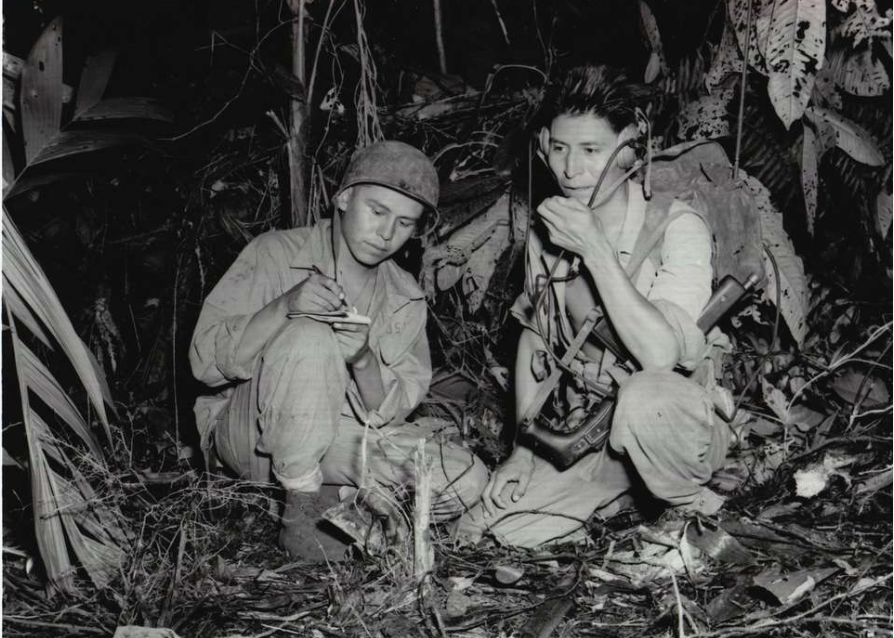
The code talkers’ impact on American society mattered deeply and still does because their contributions were not just tactical advantage, it was something the United States did not already have and could not imitate easily. During World War II, the U.S military needed fast and secure communication strategies that the enemy forces couldn’t break into. Indigenous languages used by men from Native American reservations became the foundation of an unbreakable code. Multiple diverse languages were generally unwritten, and experienced decades of ignorance from outsiders. Men from these Native American tribes did not just speak memos’, they built entirely coded systems within their own language, turning everyday words spoken at home into strategic military meanings. The combinations of encrypted depth and cultural knowledge made the code nearly impossible to decipher.
Navajos were not alone. Members of the Choctaw Nation, Comanche Nation, and the Hope Tribe became an important role as code talkers strewn across both World Wars. What sticks out is that many of these men came from communities that had been constantly marginalized by the same country they felt the need to protect. Most men experienced the cruel discouragement, and punishment for speaking their mother tongue in boarding schools. It was a whiplash of staggered emotions by being told they were needed in a vulnerable time for the U.S. Their languages were pushed away for so long it felt astonishing to use their vernacular words as one of the most valuable assets for the U.S. military.
These complex actions committed over decades superimposed into a big puddle of contradictions of pride and confusion. For families, it is layered. There exists pride that generations hold onto, the legacy of relatives who served with their culture and intelligence. But there is a sense of complexity, because recognition came late. The absolute total of code talkers was sworn to secrecy for years after the war. Their contributions to the U.S. weren’t publicly acknowledged until decades after the war ended.
Today, their legacy influences the effort to preserve indigenous languages and important culture. It strengthens the idea that these languages are not just historical artifacts to be put away, but still living systems of knowledge and sense of identity. At the same time, there was a reported removal of ten articles detailing the heroism of Native American contributions to the U.S. military have been removed from the U.S. Army and Department of Defense websites, now with URLs marked as “DEI.” This is linked to the Trump Administration’s executive order to clear federal diversity, equity, and inclusion (DEI) efforts. These actions raise concerns about visibility; whose stories are preserved in their original state, and whose stories are made harder to find. For many families and communities, that visibility isn’t symbolic but is tied to recognition, respect, and the historical truth to their heritage.